


 Gel Polish
 Gels
 Liquids
 Tools
 Consumables
 Equipment
 Furniture
 Disinfection
 Nail Art
 Nail polish
 Starter Kit
 Face & Body
 Korea
 Outlet
 Education

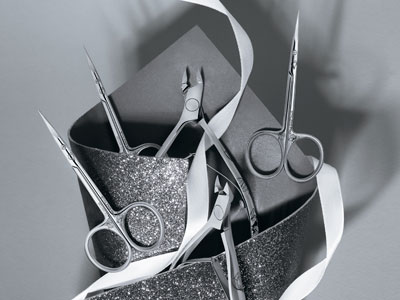
Scissors or nippers — one of the most common questions in professional manicure. Both tools work with the cuticle and lateral nail folds, but they do so in different ways. The choice depends not on personal preference, but on the working technique, the client's skin type, and the specific task.
How These Tools Differ
Scissors cut with a sliding motion — one blade moves relative to the other. This produces a smooth, controlled cut without pressure on the skin. Nippers work differently: two blades close toward each other and remove material with a precise, concentrated force. Each principle has its own strengths and limitations.
When Scissors Work Better
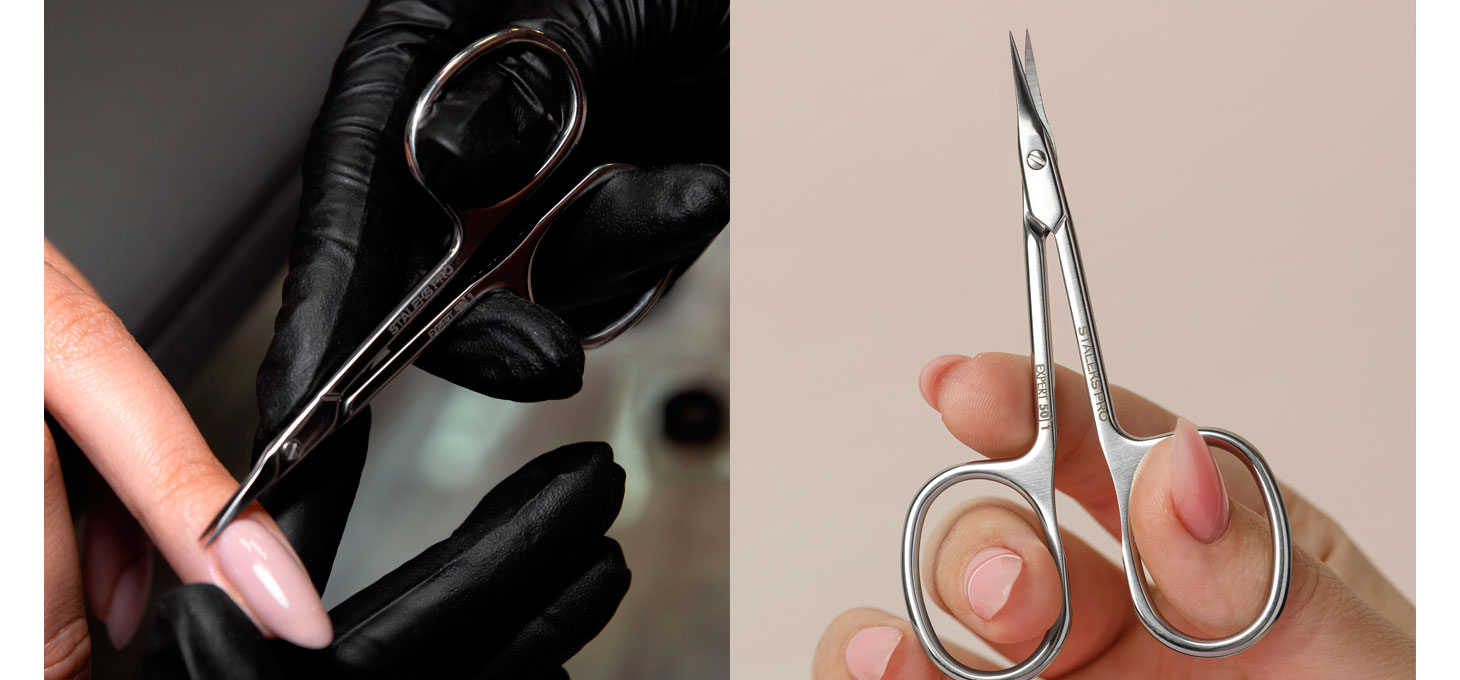
Scissors are a more versatile tool for working along longer sections of the cuticle and lateral nail folds. They allow a continuous cutting line without lifting the tool from the skin. This is especially convenient when dealing with abundant cuticle or pterygium, where a large area needs to be removed in a single pass.
- Smooth cut without pressure on the skin.
- Well suited for working along the cuticle growth line.
- Suitable for thin and sensitive skin.
- Lower risk of pinching the skin with correct technique.
When Nippers Work Better
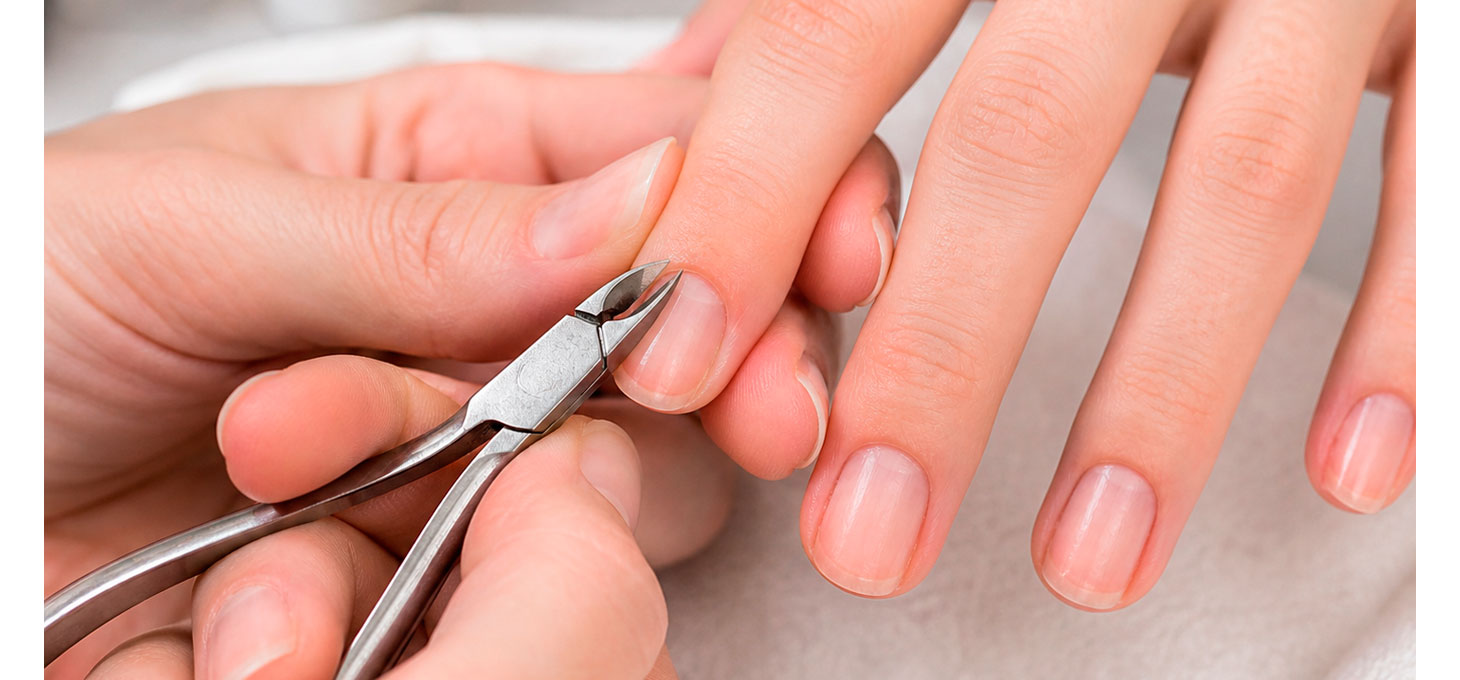
Nippers are indispensable where precise, targeted work is needed: removing hangnails, correcting lateral nail folds in hard-to-reach areas, working with dense or hardened cuticle. Thanks to the compact jaw shape, they provide precise control in small zones.
- Targeted action — ideal for hangnails.
- Convenient in hard-to-reach areas: nail corners, lateral folds.
- Effective on dense and hardened cuticle.
- Compact jaws provide high control over the cutting zone.
Key Differences
- Working principle — scissors cut with a sliding motion, nippers with jaw closure.
- Area of use — scissors for extended sections, nippers for targeted work.
- Cuticle type — scissors are preferable for thin skin, nippers are more effective on dense cuticle.
- Risk of injury — with incorrect technique, nippers are more likely to pinch the skin than scissors.
- Maintenance — scissors are easier to resharpen, nippers require specialised jaw sharpening.
Who Should Use What
Professionals who are just getting started with machine or combination manicure will find scissors easier to begin with — they offer more control and are more forgiving of minor movement imprecisions. Experienced professionals working with different cuticle types should have both tools available: scissors for general work and nippers for targeted correction.
How to Choose Each Tool
- Identify which tasks dominate your work — extended sections or targeted correction.
- Assess the typical cuticle type of your clients — thin and delicate or dense and hardened.
- Check the sharpening quality: the cut should be clean without pressure or pulling.
- Make sure the tool sits comfortably in your hand — finger fatigue during extended work directly affects the result.
- Check with the manufacturer whether the tool can be resharpened — a professional tool should be restorable.
Tool Care
- After each use — clean and disinfect.
- Periodically — lubricate the pivot or hinge with specialist oil.
- Store in a case or on a magnetic stand, separately from other tools.
- Resharpening only by a specialist familiar with the geometry of the specific tool.
The Benefits of Choosing Right
- A clean and safe cut — fewer injuries and irritations for the client.
- Comfort at work and reduced strain on the hand throughout the day.
- Long service life with proper care and timely resharpening.
- A professional result that clients notice and appreciate.
Summary
Scissors and nippers are not competitors — they complement each other. Scissors handle extended sections and thin skin better, nippers excel at targeted correction and dense cuticle. A professional nail technician uses both tools depending on the task. A wide selection of professional manicure scissors and nippers is available at OrangeShop.ee.


