
 Gel Polish
 Gels
Gels
 Liquids
 Tools
Tools
 Consumables
 Equipment
 Furniture
 Disinfection
 Nail Art
 Nail polish
 Starter Kit
 Face & Body
 Korea
Korea
 Outlet
 Education

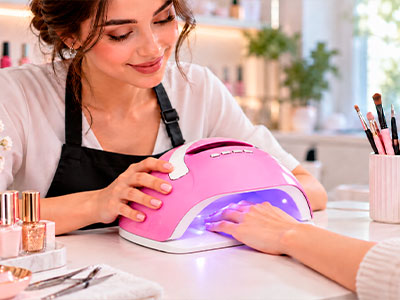
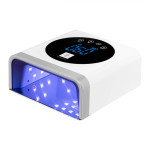
A professional UV/LED nail lamp is one of the essential tools for nail technicians. Choosing the right equipment affects not only working comfort but also the quality of curing gel polishes, base coats, top coats and nail sculpting materials. When purchasing a lamp, it is important to consider more than wattage and the number of LEDs. Compatibility with nail products, light distribution and available curing modes are particularly important.
UV, LED and UV/LED — What's the Difference?
All these lamps use light to initiate the polymerisation of specially formulated nail products. The main difference lies in their light sources and emission wavelengths.
- UV lamps — traditional models with fluorescent ultraviolet light sources. Compatible materials generally require longer curing times.
- LED lamps — devices using LEDs that emit light within specific wavelength ranges. They can provide faster curing of coatings specifically formulated for these wavelengths.
- UV/LED lamps — modern LED devices that often combine two wavelength ranges, such as 365 and 405 nm. This expands their compatibility with different light-curable nail products.
For professional salons, a multi-wavelength UV/LED lamp is often a practical choice. However, even this type of lamp is not guaranteed to be compatible with every nail coating.

Which Specifications Should You Consider?
When choosing a professional nail lamp, several factors should be evaluated together:
- 365 and 405 nm wavelengths — a common combination for curing modern gel nail products. However, the lamp's emission spectrum must match the photoinitiators in the products being used.
- Wattage — a measure of electrical power consumption that does not, on its own, determine curing performance. A lamp with higher wattage is not necessarily more effective than a lower-wattage model.
- Light intensity and distribution — light must reach all nails, including thumbs and side areas. LED positioning and the design of the curing chamber both matter.
- Timer and Low Heat mode — a timer helps maintain the required curing duration, while gradually increasing light intensity may reduce heat sensations when working with certain gels.
- Housing design — sufficient space for the hand, a removable base for pedicures and easy cleaning are especially important for daily salon use.
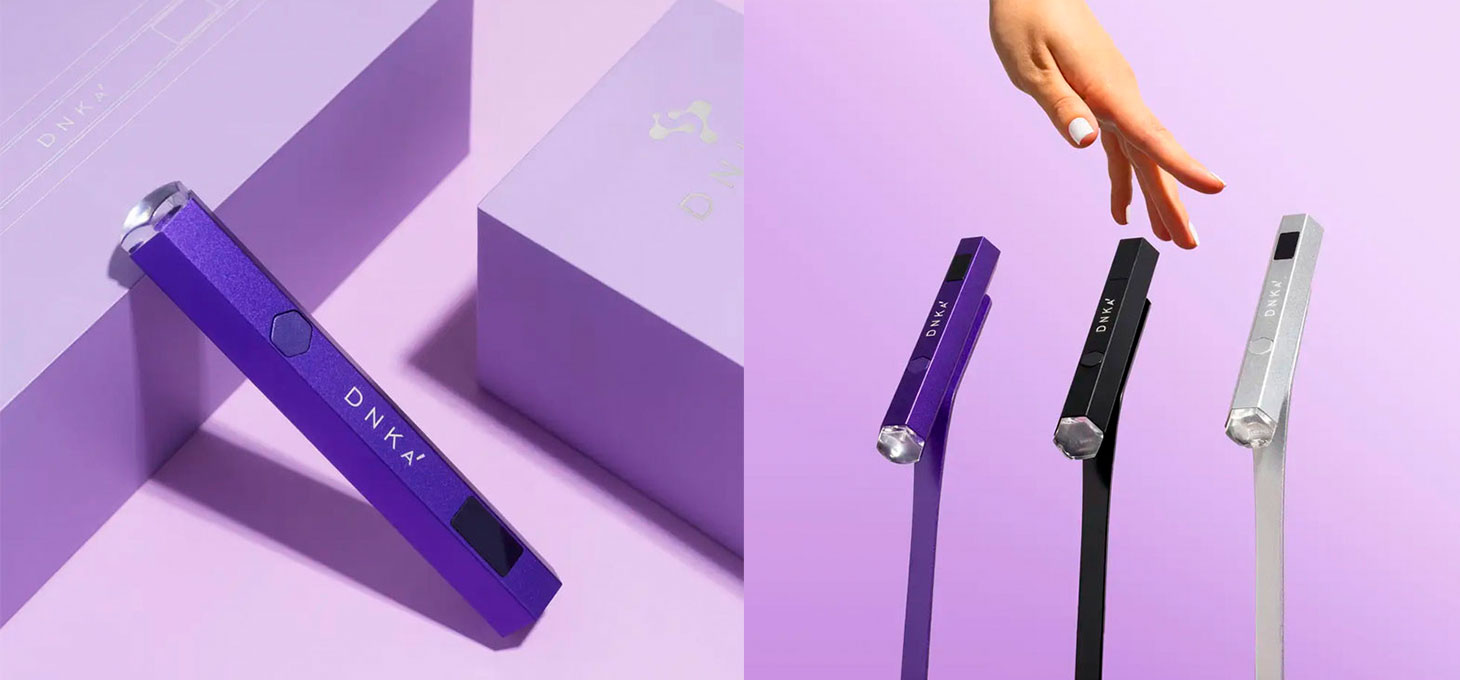
- Power supply — corded lamps are suitable for permanent workstations, while rechargeable models provide greater flexibility when arranging the working area.
Why Doesn't 48 W or 72 W Guarantee Better Curing?
When comparing lamps, customers often focus on advertised power ratings such as 48, 54 or 72 W. However, wattage is not the same as the light intensity reaching the nail surface. Curing performance depends on the emission spectrum, LED efficiency, distance from the coating and exposure time.
A well-designed lamp may therefore perform more effectively than a model with a higher advertised wattage. When selecting equipment, look for information about product compatibility and manufacturers' recommendations rather than focusing only on the highest wattage figure.
Which Lamp Is Suitable for Gel Polish, Strengthening and Extensions?
The ideal model depends on the treatments that make up most of a nail technician's work:
- For gel polish manicures — a full-size UV/LED lamp with a timer, even light coverage and confirmed compatibility with the base coats, colours and top coats being used.
- For nail strengthening and sculpting — a lamp suitable for the specific builder gels and acrygels used, preferably with a gradual light-intensity mode.
- For manicures and pedicures — a lamp with well-positioned light sources, a spacious curing chamber and a removable base.
- For mobile nail technicians — a compact or rechargeable model with suitable curing specifications and sufficient battery operating time.
If a technician uses products from several brands, it is particularly important to check the recommended lamps for each product system in advance. A general UV/LED label does not replace this verification.
Common Mistakes When Choosing and Using a Nail Lamp
Even expensive equipment cannot ensure proper curing if its specifications are unsuitable for the materials or the recommended application procedure is not followed.
- Choosing by wattage alone — a high wattage figure does not confirm the correct emission spectrum or adequate light intensity at the nail surface.
- Incorrect hand positioning — thumbs and side areas may receive insufficient light. Thumbs may need to be cured separately.
- Applying excessively thick layers — light may not penetrate deeply enough, particularly through heavily pigmented coatings.
- Reducing curing time without guidance — a visibly hard surface does not mean that the coating has fully cured.
- Neglecting equipment condition — a dirty curing chamber, damaged LEDs or an unsuitable power adapter can affect lamp performance.
Insufficient curing may increase exposure to unreacted components of gel nail products, including substances capable of causing contact allergies. It is therefore important to follow manufacturers' instructions and prevent uncured materials from contacting the skin.
Where to Buy a Professional UV/LED Nail Lamp in Estonia?
The online store offers professional manicure and pedicure equipment, including nail curing lamps, electric nail drills, dust collectors and related nail products.
Before purchasing a UV/LED nail lamp, compare the technical specifications, check compatibility with your gel products and consider whether the design suits your workstation. Properly selected equipment helps maintain a consistent workflow and follow professional manicure procedures.